The ambition of marketing has not really changed. Reach the right people, say something worth hearing, move them to act, and do it accountably. What has changed is the number of moves required to get good work into market.
Ten years ago a campaign lived on a handful of channels with a handful of assets. Today the same idea has to become dozens of formats, tested across audiences, measured in near real time, reported to more stakeholders and adjusted while it runs. The strategy is not harder. The execution is.
Why more people is not the answer
The traditional agency answer to more work was more people. More hands, more hand-offs, more coordination, more process. That model was designed for a slower cadence. Applied to always-on marketing, it adds cost and latency exactly where speed matters most.
The constraint moved from ideas to execution. So we rebuilt around execution.
Adding AI on its own does not fix it either. AI creates speed, but speed without judgement just gets the wrong work into market faster. The useful question is not how much can we automate — it is where does a human change the result, and where does a human only slow it down.
What we did about it
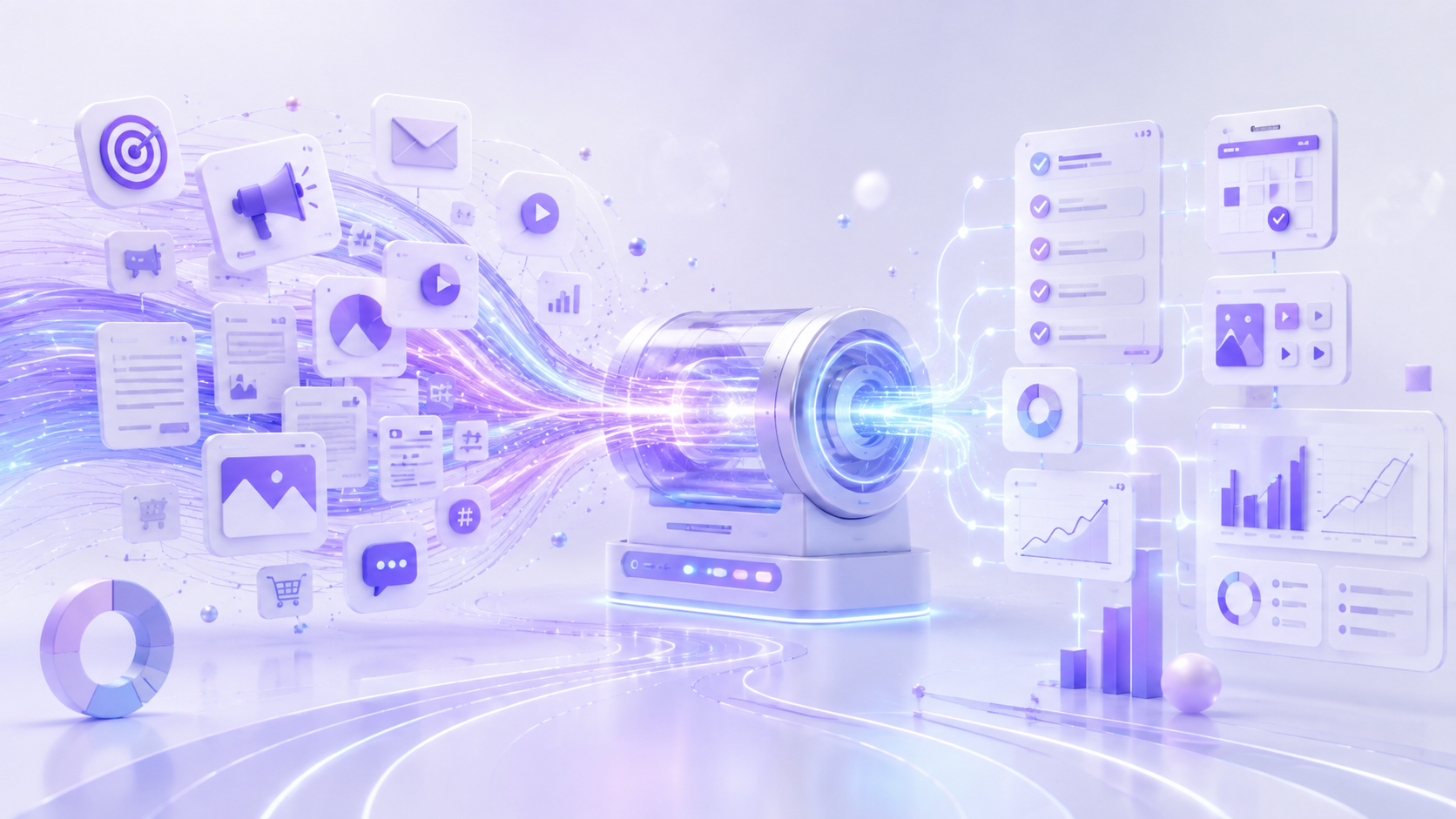
We combined senior strategists, performance specialists and creative intelligence with an execution engine we built in-house — Vidro — that connects the journey from brief to market. Repetitive, large-scale and pattern-based work moves through the system. Strategy, creativity, commercial judgement and quality stay with people. Human where humans are better. AI where AI is better.
The result is not more marketing activity. It is faster execution, more testing and tighter learning cycles — the things that actually move outcomes.